RECENT POST FROM THE BLACK BOX CLUB

Thursday, 3 May 2012

FRANKENSTEIN: THE TRUE STORY (1974) MASON AND SARRAZIN REVIEW AND GALLERY


CAST:
Leonard Whiting (Victor Frankenstein), Michael Sarrazin (The Monster), Nicola Pagett (Elizabeth Fanshawe/Frankenstein), James Mason (Dr Polidori), Jane Seymour (Prima/Agatha), David McCallum (Henry Clerval), Ralph Richardson (Lacey)

PRODUCTION:
Director – Jack Smight, Screenplay – Don Bachardy & Christopher Isherwood, Based on the Novel Frankenstein by Mary Shelley, Producer – Hunt Stromberg Jr, Photography – Arthur Ibbetson, Music – Gil Melle, Special Effects – Roy Whybrow, Makeup – Roy Ashton, Production Design – Wilfred Shingleton. Production Company – Universal.

SYNOPSIS:
After the death of his younger brother William, medical student Victor Frankenstein determines to find a way of reviving the dead. Fellow doctor Henry Clerval shows him a means of reanimating a severed arm with the use of solar energy. Obsessed, Frankenstein joins Clerval in building a handsome creature that they piece together from the bodies of several workmen killed in a quarry accident. After Clerval dies of a heart attack.

Frankenstein places his brain inside the creature and brings it to life. He is amazed at the creature’s intelligence – but soon the process begins to reverse itself and the creature’s body degenerates. The creature falls into despair and tries to kill itself but finds that it cannot, that it is invulnerable. The creature is found by Clerval’s teacher, the crippled Dr Polidori, who forces Frankenstein into helping create an Eve for the creature. Frankenstein builds the beautiful Prima. But after Frankenstein introduces her to high society, the creature exacts a disastrous revenge on them for this, killing her. Frankenstein flees aboard a ship but the creature pursues him up into the Arctic determined to kill him.


COMMENTARY:
The subtitle ‘the true story’ is wholly contentious but this classy, literate television production is a commendable attempt to sidestep the previous cinematic interpretations of the Frankenstein story – respectively Universal’s Frankenstein (1931) and Hammer’s The Curse of Frankenstein (1957) – and return to the story that Mary Shelley wrote. Frankenstein: The True Story is not really all that close to the book, but the film does bring in many aspects that have been dropped from other versions of the story – the climactic pursuit into the Arctic, and most importantly the intelligent (as opposed to dumb and brutish) creature and his relationship with his creator, and the levels of Biblical metaphor. 


The film also borrows strongly from Bride of Frankenstein (1935) – it includes an equivalent of the Pretorius character (who is now named Dr Polidori after Lord Byron’s physician, who was also present at the famous Villa Deodati writer’s workshop where Mary Shelley received her inspiration to write the book) and his blackmailing plans for a female creation, as well as the violin-playing blind hermit.


Jack Smight’s direction lags at times but there a number of strong sequences, especially the scene where the monster invades a ball and rips the female creation’s head off. It is all mounted in lavish period style. Particularly good is the rooting of the film inside the historically accurate charnel houses and the appalling sanitary conditions of the hospitals of the period. Although the use of solar power rather than electricity seems an overly strained attempt to avoid the cliches of electric storm regenerations from previous films.


The impressive cast list manages to unite the cream of the British Screen Actors Guild, including the likes of Ralph Richardson, John Gielgud, David McCallum and a young Jane Seymour. Leonard Whiting, while rather weak-jawed, projects great idealistic drive and intensity as Frankenstein. Nicola Pagett gives a real moralistic strength of character to Elizabeth. Although the standout is James Mason’s glitteringly megalomaniac performance as Polidori.


On tv, Frankenstein: The True Story aired as a 175 minute production, which is usually screened in two two-hour parts. However the film was also released to cinemas in a 123 minute print, which curtails much of the storyline and was poorly received by critics at the time. Celebrated novelist Christopher Isherwood, best known for the autobiographical stories that formed the basis of Cabaret (1972), was not at all happy at the way his and Don Bachardy’s script was treated by Jack Smight and the producers and they published their own version of the screenplay in book form as Dr Frankenstein (1973).


The other versions of the Frankenstein story are:– Frankenstein (1910), the silent Thomas Edison short; Frankenstein (1931), Universal’s classic James Whale adaptation starring Boris Karloff; The Curse of Frankenstein (1957), Hammer’s classic adaptation with Peter Cushing and Christopher Lee; The Horror of Frankenstein (1970), Hammer’s lame comedy remake; Dan Curtis’s tv adaptation Frankenstein (1973); the Swedish-Irish production Victor Frankenstein (1977); Frankenstein (1992), David Wickes’ dreary tv adaptation with Patrick Bergin and Randy Quaid; Kenneth Branagh’s Mary Shelley’s Frankenstein (1994) with Robert De Niro; and the tv mini-series Frankenstein (2004) with Alec Newman as Frankenstein and Luke Goss as the monster.


Jack Smight is a director who has made some occasional genre forays including the Ray Bradbury adaptation The Illustrated Man (1968), the serial killer black comedy No Way to Treat a Lady (1968), the Ray Bradbury adaptation The Screaming Woman (tv, 1972) and the post-holocaust film Damnation Alley (1977). Smight is probably best otherwise known for the Paul Newman thriller Harper (1966) and big-budget films of the 1970s such as Airport 1975 (1974) and Midway (1977). 


REVIEW: Richard Scheib
IMAGES: Marcus Brooks
REVIEW: HERE

Tuesday, 1 May 2012

PETER CUSHING CLASSIC MOMENT FROM PETERCUSHING.ORG.UK


Another PETER CUSHING CLASSIC MOMENT from the UK PETER CUSHING APPRECIATION SOCIETY WEBSITE petercushing.org.uk. If you're a Hammer Film Fan who also likes Peter Cushing, you're missing out on a lot of  great PETER CUSHING MEMORABILIA that's posted on the website. Why not hop on the site now and have a sniff around. If you have a FACEBOOK account, take a look at the UK Peter Cushing Appreciation Society Group too!

'MONSTER MAG' NUMBER FIVE VOL: ONE: TWINS OF EVIL POSTER


MONSTER MAG ISSUE FIVE: VOL ONE: FULL COLOUR PHOTOGRAPHS AND A HUGE POSTER. WHAT MORE COULD A 1970'S TEENAGE HORROR FILM FAN WANT?

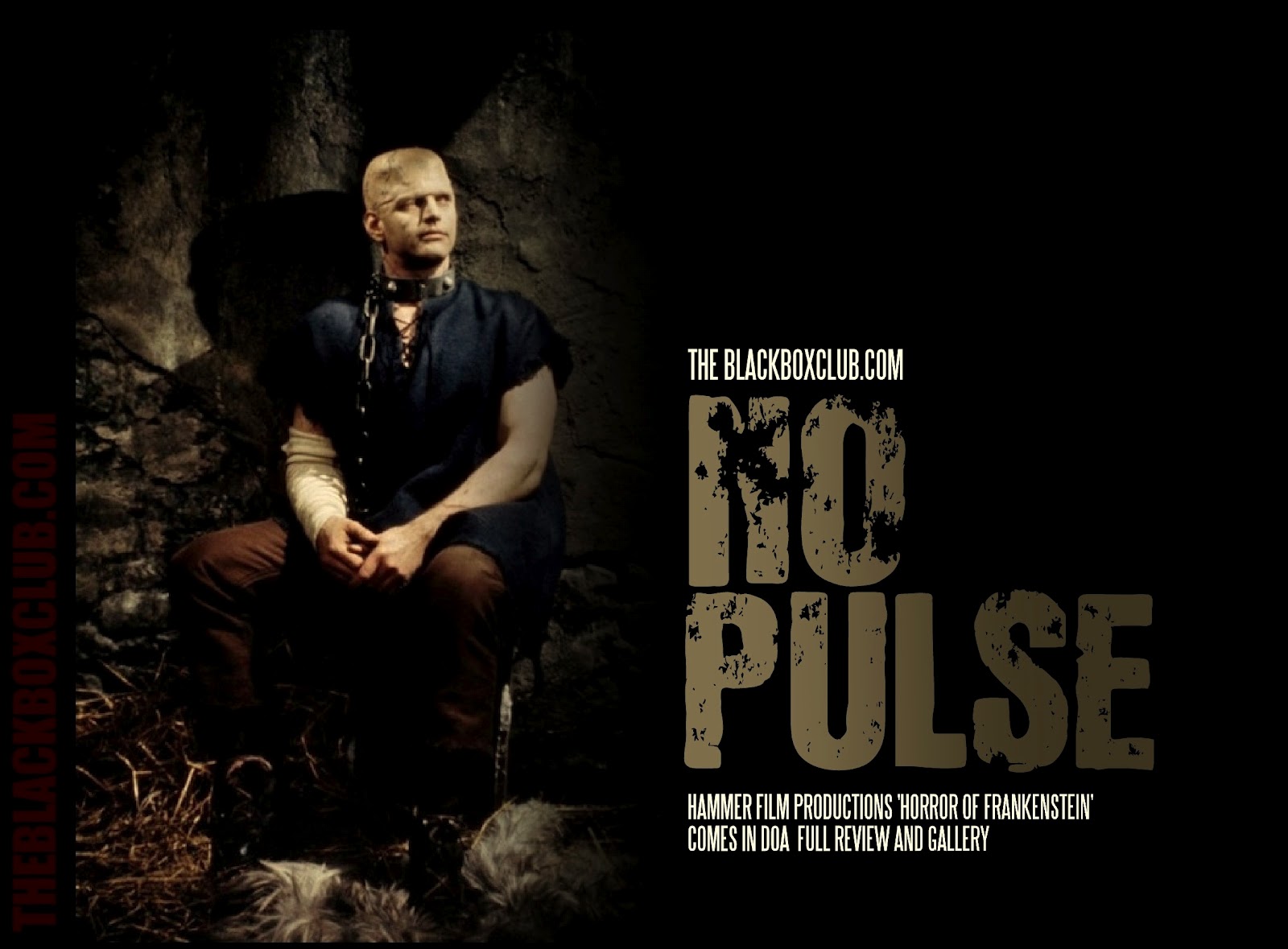
HAMMER FILM PRODUCTIONS: 'THE HORROR OF FRANKENSTEIN' : BATES: CARLSON: SANGSTER:NO PULSE!


CAST:
Ralph Bates (Victor Frankenstein), Dave Prowse (The Monster), Kate O’Mara (Alys), Veronica Carlson (Elizabeth Heiss), Graham James (Wilhelm Kastner), Dennis Price (Grave Robber), Bernard Archer (Professor Heiss), Jon Finch (Lieutenant Henry Becker)

PRODUCTION: 
Director/Producer – Jimmy Sangster, Screenplay – Jimmy Sangster & Jeremy Burnham, Photography – Moray Grant, Music – Malcolm Williamson, Makeup – Tom Smith, Art Direction – Scott MacGregor. Production Company – Hammer/EMI.


SYNOPSIS:
Victor Frankenstein, a cold, arrogant and womanising genius, is angry when his father forbids him to continue his anatomical experiments. He sabotages his father’s shotgun, causing him to be killed. Inheriting the family fortune, Victor uses this to enter med school in Vienna but is forced to return home when he gets the dean’s daughter pregnant. There he sets up laboratory, starting a series of experiments into the revivification of the dead. Eventually, he builds up a composite body from human parts, which he brings to life.

COMMENTARY:
The Horror of Frankenstein was the fifth film in Hammer’s Frankenstein series. By 1970, Hammer had regurgitated most of their monster themes several times over. The Horror of Frankenstein came at the point Hammer were starting to inject new blood into their product. The influence of the younger generation was making itself felt and Hammer were casting younger stars, recruiting young directors, not to mention placing an open emphasis on sexuality in films. 


With The Horror of Frankenstein, screenwriter Jimmy Sangster was brought back to rewrite his script for The Curse of Frankenstein (1957), which started the series and Hammer’s reputation as a horror industry leader off thirteen years before, while he was also allowed to make his debut as director. The role of Frankenstein was given a facelift and Peter Cushing was unceremoniously dumped from the role in favour of Ralph Bates whom Hammer were grooming as a new horror star at the time. 

Publicity stills were shot on the set with Ralph Bates and Peter Cushing shaking hands to announce the change. The future of the Frankenstein series seemed to be heading in a new direction ... only The Horror of Frankenstein was a disaster and the Hammer Frankenstein series failed to go in any new directions.


The Horror of Frankenstein starts in with a promising sense of black humour. However, the opening tapers off and Jimmy Sangster thereafter seems uncertain whether he is delivering parody or straight melodrama. The effort turns out dismally where all that Sangster ends up doing is weakly echoing The Curse of Frankenstein in a plot that seems more interested in Frankenstein’s sexual dalliances than his medical obsessions. The sets seem flatly lit. Dave Prowse, the bodybuilder who later played Darth Vader in Star Wars (1977) and sequels, turns the monster into a mindless brute. The best thing about the film is Ralph Bates’s cold and arrogant Frankenstein but the rest of the show is dreary and dull.

The saddest thing about The Horror of Frankenstein is that it comes from Jimmy Sangster who did such a fine job in tuning the script for Hammer’s The Curse of Frankenstein. There is such a gulf between The Curse of Frankenstein and the loose remake here in terms of quality with Sangster seeming to understand so little about what made the original work that the success of Curse can only be placed down to director Terence Fisher.

The other Hammer Frankenstein films are:– The Curse of Frankenstein (1957), The Revenge of Frankenstein (1958), The Evil of Frankenstein (1964), Frankenstein Created Woman (1967), Frankenstein Must Be Destroyed (1969) and Frankenstein and the Monster from Hell (1973).
 

Jimmy Sangster made two other films for Hammer as director – the lame softcore Karnstein film Lust for a Vampire (1971) and the quite good psycho-thriller Fear in the Night (1972). X the Unknown (1956), The Curse of Frankenstein (1957), Dracula/The Horror of Dracula (1958), The Revenge of Frankenstein (1958), The Man Who Could Cheat Death (1959), The Mummy (1959), The Brides of Dracula (1960), the psycho-thrillers A Scream of Fear/Taste of Fear (1961), Paranoiac (1962), Maniac (1963), Nightmare (1963), Hysteria (1965) The Nanny (1965) and Crescendo (1970), and Dracula – Prince of Darkness (1966), all for Hammer. Sangster’s non-Hammer scripts are the lost medical vampire film Blood of the Vampire (1958), the alien invasion film The Trollenberg Terror/The Crawling Eye (1958), Jack the Ripper (1959), the Grand Guignol psycho-thriller Who Slew Auntie Roo? (1971), the tv movie psycho-thrillers A Taste of Evil (1971) and Scream, Pretty Peggy (1973), the occult tv movie Good Against Evil (1977), the occult film The Legacy (1979), the spy tv movies Billion Dollar Threat (1979) and Once Upon a Spy (1980), the psycho-thriller Phobia (1980) and the story for Disney’s The Devil and Max Devlin (1981). 

REVIEW: Richard Scheib
IMAGES: Marcus Brooks
REVIEW: HERE

Monday, 30 April 2012

'THE DAY OF THE TRIFFIDS' : HOWARD KEEL JANETTE SCOTT: REVIEW AND GALLERY OF THE 60'S CLASSIC


CAST:
Howard Keel (Bill Masen), Nicole Maurey (Christine Durant), Janina Faye (Susan), Kieron Moore (Tom Goodwin), Janette Scott (Karen Goodwin), Carole Ann Ford (Bettina), Mervyn Johns (Professor Coker), Geoffrey Matthews (Luis de la Vega), Gilgi Hauser (Teresa de la Vega)


PRODUCTION:
Director – Steve Sekely, [Uncredited Additional Scenes – Freddie Francis], Screenplay – Phillip Yordan, Based on the Novel by John Wyndham, Producer – George Pitcher, Photography – Ted Moore, Music – Ron Goodwin, Special Effects – Wally Veevers, Makeup – Paul Rabiger, Production Design – Cedric Dawe. Production Company – Security Pictures.
SYNOPSIS:
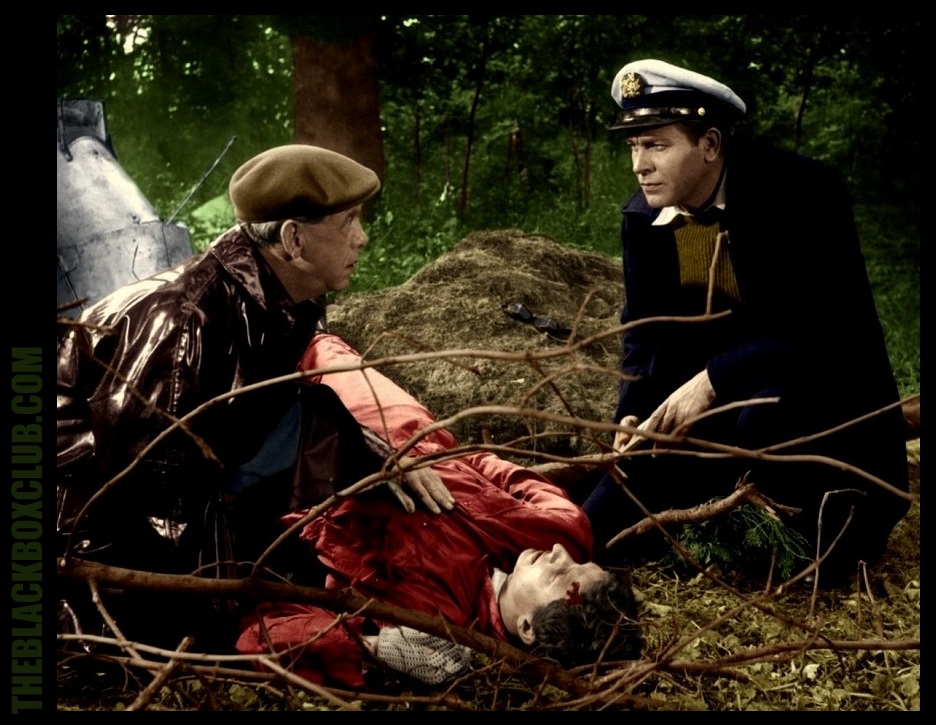
Sailor Bill Masen is in hospital for an eye operation. With his eyes bandaged, he is unable to witness a freak meteorite shower that occurs that night. When he wakes up in the morning, Masen finds London in chaos with the entire populace having been blinded by radiation from the meteorite shower. The shower has also brought with it triffids, a form of ambulatory, carnivorous plant that now emerge to prey upon the helpless populace. Gathering a small group of seeing survivors, Masen makes his way across Europe fighting off the triffids and searching for survivors to reorganise civilisation.
COMMENTARY
In the 1950s, British author John Wyndham was for a time regarded as a successor to H.G. Wells. Wyndham had considerable success with novels such as The Day of the Triffids (1951), The Kraken Wakes (1953), The Chrysalids (1955) and The Midwich Cuckoos (1957). In effect, Wyndham took the apocalyptic science-fiction of Wells and reworked it into disaster parables for middle-class England of the 1950s. John Wyndham’s books proved very popular in the time, as much with crossover audiences as they were with science-fiction readers.
This film of the John Wyndham novel is mostly – and rightly so – lambasted for the complete demolition job it does of the book. The script was from Phillip Yordan a prolific Hollywood screenwriter who wrote a number of Cinemascope religious/historical epics – El Cid (1961), King of Kings (1961) and The Fall of the Roman Empire (1964), and had revealed an equally clod-handed hand for science-fiction with Conquest of Space (1955). The director was Hungarian émigré Steve Sekely, who had made a number of crime thrillers in the 1940s and previously visited genre material with the cheap Revenge of the Zombies (1943).
Most insulting of the changes that the film rings up is its need for a happy ending where humanity overcomes the triffid menace. This is hilariously tipped by a prominently featured sign: “Seawater: Warning – Highly Dangerous” sitting in the lighthouse – and it is no cheesier than when Dorothy employed it against the Wicked Witch of the West in The Wizard of Oz (1939). The ending with the masses trouping in a long line up to a church to, what the narrator ominously informs, “give thanks” for their delivery, unhappily looks back to the pious ending of the equally pillaged film adaptation of H.G. Wells’ The War of the Worlds (1953). It is an ending that seems all the more false for the abject cheer in the face of the situation ie. 99% of the world having been blinded.
On the plus side, it should be said that The Day of the Triffids has its occasional moments. After a dull opening, the film impresses for a time, even if all that impresses has been taken direct from John Wyndham. The blindness is neatly introduced in a scene where a doctor gets Howard Keel to examine his eyes, confirming the diagnosis of blindness, then sends him to find a non-existent satchel while behind a screen one can see the doctor running up to the window and then the smash of glass as he jumps through. Steve Sekely is even good enough to improvise a series of apocalyptic vignettes of his own invention, most impressively the cutaway to the panic of the passengers aboard a plane about to crash because it has no more fuel. However, by the time the film has reached the continent, any semblance to John Wyndham has been abandoned and the plot peters out into a series of lacklustre incidents.
The effects work is of a decidedly variable quality. The opticals work with a meteorite shower flashing down behind and lighting up the interior of the conservatory is fine, as are the patchwork opticals of a burning London. However, when it comes to actually having to build models it seems the budget has run out, failing at all to show the crashing of the train into the station or the plane into the docks. The triffids move exactly as though they are being pulled along on a low trolley from below camera-height. At least Steve Sekely whips them up into some occasionally effective scares – one scene with a triffid closing in on a skidding car was clearly mimicked seventeen years later by John Carpenter in The Fog (1980). The lighthouse scenes with Kieron Moore and Janette Scott were in fact shot afterwards by Freddie Francis, later to become a genre director for Hammer and Amicus, when the film that Sekely delivered was not up to running length.
The film was remade as a tv mini-series The Day of the Triffids (1981) by the BBC, which is an excellent adaptation that is much more faithful to the novel and has far more convincing Triffid effects. The Day of the Triffids (2009) was a further tv mini-series remake from the BBC with Dougary Scott as Bill Masen and Joely Richardson as Josella, although this widely departed from the John Wyndham novel.
Other John Wyndham screen adaptations are Village of the Damned (1960), from Wyndham’s The Midwich Cuckoos (1957), which was remade as Village of the Damned (1995); the alternate world film Quest for Love (1971); and the children’s tv series Chocky (1984) about an alien visitor. 


REVIEW: Richard Schheib
IMAGES: Marcus Brooks
REVIEW: HERE

Sunday, 29 April 2012

'THE TIME MACHINE' THE BLACKBOXCLUB.COM TURNS BACK THE CLOCK TO THE 1960'S PAL CLASSIC.


PRODUCTION CREW:
Director/Producer – George Pal, Screenplay – David Duncan, Based on the Novel by H.G. Wells, Photography – Paul C. Vogel, Music – Russell Garcia, Special Effects – Wah Chang & Gene Warren, Makeup – William Tuttle, Art Direction – George W. Davis & William Ferrari. Production Company – Loews Inc/Galaxy Films. (1960)

CAST:
Rod Taylor (George), Alan Young (David Filby/James Filby), Yvette Mimieux (Weena), Sebastian Cabot (Dr Philip Hillyer), Whit Bissell (Walter Kemp)

SYNOPSIS:
At a dinner party on New Year’s Eve of 1899, George, a Victorian inventor, unveils his plans for a time machine to his dinner guests and astounds them by displaying a miniature working model. That evening George embarks on his maiden journey in the life-size version. Marvelling at seeing time speeded up, he passes through World Wars 1, 2 and 3 and eventually arrives in the year 802,701. There he meets the descendants that humanity has turned into – the gentle, lotus-eating Eloi. Among the Eloi, he falls for the lovely Weena. He then becomes embroiled in a fight to save the Eloi from the brutal, cannibalistic, underground-dwelling Morlocks.
COMMENTARY:
The Time Machine was one of the finest films to emerge from George Pal. Pal was the single most important contributor to science-fiction in the 1950s, having produced such films as Destination Moon (1950), When Worlds Collide (1951) and The War of the Worlds (1953). (See below for George Pal’s other genre productions). The success of the adaptations of Jules Verne’s 20,000 Leagues Under the Sea (1954) and Around the World in 80 Days (1956) had produced an interest in period science-fiction. After a number of Verne adaptations, filmmakers started to turn to Verne’s contemporary H.G. Wells as a source.
H.G. Wells’ The Time Machine (1895) is a science-fiction classic. It essentially popularized the concept of time travel and certainly of the time machine. H.G. Wells was a socialist with considerable opinions about the way society should be – in later life, social crusading took over completely from his fiction writing. In The Time Machine, his vision of humanity’s future was a satirical vision of the British class conflict. 
The Eloi are much more savagely condemned in the book than they are here in the film – Wells saw the Eloi as the upper-classes, dulled by creature comforts, while the underground-dwelling Morlocks were a stand-in for the Victorian mill workers. In an element that is missing from the film, Wells saw the relationship between the two as co-dependant and exploitative – the Morlocks provided everything for the Eloi while the Eloi in return allowed themselves to be devoured. 
In the film, the Eloi are merely an innocent race that needs to be delivered from oppressive thrall by an outsider. Now the story is not too different from 1950s science-fiction films such as Captive Women (1952), World Without End (1956), Beyond the Time Barrier (1960) and The Time Travelers (1964) where usually an astronaut or test pilot travels into the future and does two-fisted combat with the mutants and saves a remaining human girl. Gone altogether also is H.G. Wells’s climactic scenes where the time traveller travels into the far-flung future and sees humanity evolved into crustaceans and the end of the world.
Elsewhere though, The Time Machine remains a singular delight. Like 20000 Leagues et al, George Pal keeps the book to the period when it was written. Much charm is wrought from the beautiful production design and quaint Victorian attitude to science. The writing in these scenes is whimsical, especially the touching sequence where Philby tries to persuade George against using the device. The future scenes do descend to pedestrian adventure. However, the time travel sequences – where we see Rod Taylor accelerating the machine and everything around him speeding up, the passage of time being measured by candles melting and plants blossoming in seconds, the flickering of day and night overhead and the changing of fashions in the shop window opposite – hold a sense of wondrousness that is quite magical.
Right up until his death in 1980, George Pal had always planned a sequel to The Time Machine. One script that circulated incorporated H.G. Wells’s climactic ideas of the far future and the doom of humanity. Many writers have used the H.G. Wells novel as a basis for sequels and alternate histories.
The Time Machine was remade badly as a tv movie The Time Machine (1978). The Time Machine (2002) was a lavish big-budget remake, which had the novelty of being directed by the grandson of H.G. Wells. There is an appealing throwaway gag in the film here, – if one looks closely they can see that the plaque on the time machine shows that George’s real name is ‘H. George Wells’. The appeal of H.G. Wells himself as time-traveller is a recurrent one, having also been done in the film Time After Time (1979), the mini-series The Infinite Worlds of H.G. Wells (2001) and episodes of Doctor Who (1963-89) and Lois and Clark: The New Adventures of Superman (1993-7).
George Pal’s other genre films are:- The Great Rupert (1949), Destination Moon (1950), When Worlds Collide (1951), The War of the Worlds (1953), The Naked Jungle (1954), Conquest of Space (1955), tom thumb (1958), Atlantis, the Lost Continent (1961), The Wonderful World of the Brothers Grimm (1962), 7 Faces of Dr Lao (1964), The Power (1967) and Doc Savage – The Man of Bronze (1975).
REVIEW:Richard Scheib
IMAGES: Marcus Brooks
REVIEW: HERE


Thursday, 26 April 2012

BFI BBC: 'WHISTLE AND I'LL COME TO YOU': COMPLETE BBC CLASSIC GHOST STORIES COME TO DVD THIS YEAR.

The BFI is to make the complete series of the BBC's classic Ghost Stories finally available on DVD this year.

These much-loved tales terrified BBC TV audiences at Christmas throughout the 1970s. Most of the instalments were directed by Lawrence Gordon Clark and based on M.R. James's celebrated supernatural stories.

With only three of the twelve BBC Ghost Stories previously released on DVD (by the BFI in 2002), the films in this brilliant series have been high on many film and TV fans' 'most wanted' DVD lists.

The films are a key influence on recent British ghost and horror films, including The Woman in Black, and have inspired many screenwriters and filmmakers including Mark Gatiss (The League of Gentlemen, Sherlock).

The first two volumes will be released in August 2012 in celebration of the 150th anniversary of M.R. James's birth. Two more volumes will follow in September, while the fifth and final volume, as well as a complete Ghost Stories for Christmas box set, will follow in October.

Volume One includes two versions of the chilling Whistle And I'll Come To You: Jonathan Miller's 1968 adaptation, starring Michael Hordern, and the 2010 re-imagining, starring John Hurt.

Volume Two includes The Stalls of Barchester (1971), starring Robin Hardy, and A Warning to the Curious (1972), starring Peter Vaughan, as well as Christopher Lee's Ghost Stories for Christmas: The Stalls of Barchester (2000).


Other DVD and Dual Format Edition (DVD and Blu-ray discs together) releases from the BFI between July and September include:
The Children's Film Foundation, Volume 1: London Tales (DVD) – the first in a new series of releases of the fondly-remembered films from the archives of the Children's Film Foundation, includes John Krish's The Salvage Gang.

The British Transport Films Collection, Volume 10: London on the Move (DVD) – this welcome return for the popular BTF Collection turns its attention on the trams, buses and tube trains of London.

Wonderful London (DVD) – a unique collection of fascinating historical films shot in 1920s London.

The Soviet Influence: Battleship Potemkin/Drifters (Dual Format Edition) – two masterpieces – Sergei Eisenstein's 1925 classic, and John Grierson's ground-breaking 1929 documentary – are paired in order to examine the influence that Soviet cinema had on the British filmmakers of the 1930s.

Cria Cuervos (Dual Format Edition) – Carlos Saura's 1976 masterpiece of Spanish cinema, released for the first time on DVD and Blu-ray.

Pathé Colour Stencil: The Fairy Films (DVD) – a collection of rare French fairytale and fantasy shorts from the birth of cinema, with newly-commissioned scores from composers including Chris Watson, Philip Jeck and Fennesz.
 
A Woman Under The Influence (Dual Format Edition) – John Cassavetes's hard-hitting masterpiece, with breathtaking performances from Gena Rowlands and Peter Falk, finally gets its Blu-ray world premiere.

The Lacey Rituals: the films of Bruce Lacey (and friends) (DVD) – an extraordinary collection of films from British counter-culture hero and artist Bruce Lacey, including Richard Lester's The Running, Jumping & Standing Still Film.

Saturday, 21 April 2012

Related Posts Plugin for WordPress, Blogger...