RECENT POST FROM THE BLACK BOX CLUB

Tuesday, 20 November 2012

THE OMEN 1976 : BLACKBOXCLUB REVIEWS THE OMEN TRILOGY : REVIEW AND GALLERIES

CAST:
Gregory Peck (Robert Thorn), Lee Remick (Katharine Thorn), David Warner (Haber Jennings), Harvey Stephens (Damien Thorn), Billie Whitelaw (Mrs Baylock), Patrick Troughton (Father Brennan), Leo McKern (Bugenhagen)

PRODUCTION:
Director – Richard Donner, Screenplay – David Seltzer, Producer – Harvey Bernhard, Photography – Gilbert Taylor, Music – Jerry Goldsmith, Special Effects – John Richardson, Makeup – Stuart Freeborn, Art Direction – Carmen Dillon. PC – A Mace Neufeld-Harvey Bernhard Production. USA. 1976.  


SYNOPSIS:
Moments after his son is born in Rome, ambassador Robert Thorn is approached by a priest and told that the baby is dead but that a replacement can be offered. Thorn accepts the offer with the conditions that he not tell his wife. Soon afterwards, Thorn is appointed as US ambassador to England. As the child Damien grows up, he is surrounded by a series of strange deaths. A priest comes to Thorn, telling him that Damien is a son of the Devil and the anti-Christ. Thorn has him thrown out but shortly after the priest is bizarrely killed. Soon, events force Thorn to confront what the priest says as truth. He and a journalist set out on an international quest to find a means of killing Damien.


COMMENTARY:
The Omen was a groundbreaking film and one of the big box-office hits of the 1970s. The film came with a wonderfully catchy promotion campaign – of a poster featuring the silhouette of the child in black, which melded into an inverted crucifix against a scarlet red background and the tagline “Good morning. You are one day closer to the end of the world.” All of which served to make The Omen a big hit. Like Rosemary’s Baby (1968) and The Exorcist (1973) before it, The Omen tapped into a 1970s fascination with the occult, evil children and a pre-millennial harbinging about the end of the world. The Omen was made around the same time that quasi-apocalyptic disaster movies such as The Poseidon Adventure (1972) and The Towering Inferno (1974) were hitting big and tapped into an undeniable fascination fed by Vietnam and Watergate that the world was falling in and nearing the end. Around the same time, Christian author Hal Lindsey broached the best-seller lists with his work of Biblical non-fiction The Late, Great Planet Earth (1970) where he interpreted the Book of Revelations and prophesied the signs as being right for the Biblical End of the World and the coming of the Anti-Christ.  

Despite the presence of two religious advisors listed on the credits, The Omen is Sunday tabloid Christianity. It works in the same way that Erich Von Daniken and his Chariots of the Gods bunkum reads – as sensationalised science, archaeology and history for those who only have a smattering of knowledge about either. That said, on a level of pure entertainment there is an inspired ingenuity to screenwriter David Seltzer’s reworking of Hal Lindsey’s End Times prophecies and in turning all the Book of Revelations symbolism into an A-budget B movie. Unlike almost every one of the numerous films that sought to imitate The Omen, David Seltzer has gone to The Bible and read up on his source material. (Many of the imitators have not even done that – the third Omen film The Final Conflict, for example, quotes from non-existent books of The Apocrypha). 


Out of it all, David Seltzer creates a busy plot on a large international stage and Richard Donner directs with a slick commercial polish. The novelty of The Omen was as much its End Times sensationalism as it was the way that supporting characters were dispatched with spectacular ingenuity – Patrick Troughton vertically impaled by a pole, Lee Remick thrown out of a hospital window to bounce through the roof of a passing ambulance and, best of all – the scene that was the talking point of the film at the time – David Warner’s famous decapitation by a sheet of glass. 


There does seem a certain silliness to it – if the Devil is out to kill all those in opposition, why does he not do so before they deliver their message or manage to help those on the side of good? The story also needs someone less wooden than Gregory Peck to enervate it – the most expression he ever seems to give at the thought of the Biblical End of the World and having to murder his son is a worried narrowing of the eyes. Lee Remick is equally blank, although good support does come from David Warner and especially the wonderfully sinister Billie Whitelaw who leaves a suggestion of surliness lurking beneath her mannered politeness. The twist ending does sustain a sinister and sardonic note. Also of complement is Jerry Goldsmith’s much imitated, superlatively sinister score. The Omen was listed by the Medved Brothers in The 50 Worst Movies of All Time (1977) but certainly is not that bad. It is highly entertaining hokum.

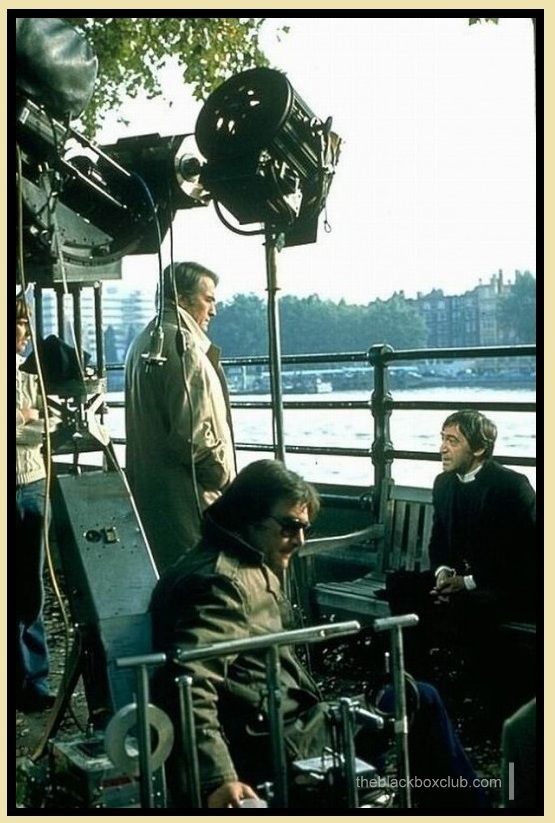
 

There were three sequels to The Omen:– Damien: Omen II (1978), The Final Conflict (1981) and Omen IV: The Awakening (1991). The Omen (2006) was a remake. The Omen (1995) was a tv pilot that had Richard Donner’s name attached, although is unrelated to the films in any way. The Omen Legacy (2001) was a documentary about the film series. 


There were a host of cheap, usually Italian-made, horror films that came out exploiting The Omen, copying its novelty deaths and making spurious Biblical connections. Two of the more interestingly serious-minded and original Biblical End Times films were The Seventh Sign (1988) and The Rapture (1991). Recent years have seen a number of films revisiting the End Times Prophecies genre but made from a Christian perspective with the likes of The Omega Code (1999) and Gone (2003), a mini-genre has been plumbed with almost obsessive regularity by the Toronto-based Lalonde Brothers and their Cloud Ten Productions in their tetraology Armageddon (1998), Revelation (1999), Tribulation (2000) and Judgment (2001), and a further series beginning with Left Behind (2000).


The Omen was an assured breakthrough for director Richard Donner. Richard Donner had debuted with the little-seen Space Age film X-15 (1961) and thereafter spent a decade directing television, including classic series such as The Twilight Zone, The Wild, Wild West, Gilligan’s Island, The Fugitive, The Man from U.N.C.L.E, Get Smart, The Six Million Dollar Man, as well as the award-winning tv movie Sarah T: Portrait of a Teenage Alcoholic (1975). Donner subsequently went on to considerable success as a mainstream director. He has made a number of other genre films – Superman (1978) based on the comic-book superhero, the fine Mediaeval romantic fantasy Ladyhawke (1985), the updated Dickens tale Scrooged (1988), the interestingly dark children’s film Radio Flyer (1992), the dud conspiracy comedy Conspiracy Theory (1997) and the dull Michael Crichton time travel film Timeline (2003). By the late 1990s, Richard Donner seemed to be a spent force, turning out endless sequels to his Mel Gibson hit Lethal Weapon (1987) and flops like Assassins (1995), which seem interested in registering more as insipid light comedy than action. Donner has also produced The Lost Boys (1987), the horror anthology tv series Tales from the Crypt (1989-96) and its two film spinoffs Tales from the Crypt Presents Demon Knight (1995) and Tales from the Crypt Presents Bordello of Blood (1996), Delirious (1991) about a writer trapped inside his own soap opera, the monster hunter film Matthew Blackheart (2002), and the comic-book adaptations X-Men (2000), Constantine (2005), X-Men Origins: Wolverine (2009) and X: First Class (2011). 


Screenwriter David Seltzer went on to write other mainstream films such as Punchline (1988) and Bird on a Wire (1990). Seltzer returned to genre material with his scripts for Prophecy (1979) about a pollution-mutated bear, the ghost story Dragonfly (2002) and then went back to Biblical End Times themes for The Eighteenth Angel (1998), the 6-episode mini-series Revelations (2005) and the 2006 remake of The Omen.

 
Review: Richard Schieb
Images: Marcus Brooks

BLACKBOXCLUB PIN UP : TWENTY FIVE: JENNIFER DANIEL : HAMMER FILMS THE REPTILE (1966)


THE OMEN TRILOGY: REVIEWED WITH PHOTO GALLERIES THIS WEEK.


Friday, 16 November 2012

HAMMER FILMS: FRANKENSTEIN CREATED WOMAN TRAILER CAPTION SCREEN GRABS

WHATEVER HAPPENED TO BOB? PLOT HOLE IN DRACULA AD 1972 HAMMER FILMS


WHAT HAPPENED TO BOB?? Here's a question for all the Hammer Dracula Fans out there. This is actor Phillip Miller as the character BOB in Hammer Films Dracula AD 1972. Bob, was the boyfriend of Van Helsing's daughter Jessica, who becomes a vampire and lures Jessica into the Count's lair...But, what became of the character? What was his fate? We think we have the answer and you'll find it over on the UK Peter Cushing Appreciation Society Facebook Fan page.

Thursday, 15 November 2012

TOM BAKER DR WHO: THE DOCTOR GETS A LITTLE TLC AND A BAND AID. OR IS IT?

There must be a story behind this one. Tom Baker with Mary Tamm in the doorway of the Tardis posing for a publicity shot, with a band aid on his top lip. Anyone?

Wednesday, 14 November 2012

TEAM HAMMER: CHRISTOPHER LEE AND PETER CUSHING TAKE PHOTO OP WITH QUEENS AWARD : EXECUTIVES AND STAFF

TEAM HAMMER: Peter Cushing and Christopher Lee join the line up of Hammer Films executives, guests and staff on the day Hammer Films were presented with the Queen's Award to Industry at Pinewood Studios on May 29th 1968.

Tuesday, 13 November 2012

STEPHEN WEEKS AND PETER CUSHING: YOUR CHANCE TO ASK QUESTIONS.


The UK Peter Cushing Appreciation Society are giving the opportunity to it's members on their facebook fan page to fire some questions at director / writer Stephen Weeks. So, if you have some burning questions you always wanted ask about I MONSTER or Stephen's other Peter Cushing collaboration SWORD OF THE VALIANT, here's your chance. Just pop along to the Facebook Fan Page, join up and submit your question!

All submissions must be in by FRIDAY 16th NOVEMBER 2012.

THE HOUSE IN NIGHTMARE PARK: FRANKIE HOWERD MAKES TITTERS IN THE DARK!


CAST:
Frankie Howerd (Foster Twelvetrees), Ray Milland (Stewart Henderson), Hugh Burden (Reggie Henderson), Elizabeth MacLennan (Verity Henderson), Kenneth Griffith (Ernest Henderson), John Bennett (Patel), Rosalie Crutchley (Jessica Henderson), Ruth Denning (Agnes Henderson)

PRODUCTION:
Director – Peter Sykes, Screenplay/Producers – Clive Exton & Terry Nation, Photography – Ian Wilson, Music – Harry Robinson, Makeup – Jill Carpenter, Art Direction – Maurice Carter. Production Company – Associated London Films/Extonation Productions. UK. 1973.  


COMMENTARY:
Foster Twelvetrees (Frankie Howerd) is a small time actor on the Edwardian stage - and the stages are usually small time as well, as are the audiences. Tonight he has just finished performing a monologue when he gets the offer to venture to a very big house in the country and entertain its residents, but he should have known better to accept a job without at first making sure he knew what he was getting into. For a start, the carriage taking him there won't go any further than half a mile from the mansion, so Foster is forced to trudge the way though the oncoming storm, getting spooked at what sounds like a scream in the forests... and that's not all. 


Although probably most successful in his work in radio and television as far as his media work went, eccentric comedian Frankie Howerd did grace the cinema in a few vehicles for his unique style and delivery. This one was a horror comedy in the mould of The Cat and the Canary, a genre that had once been a staple of the movies (admittedly a lot of them pretty cheap ones) but by 1973 was dying out aside from the odd try at recapturing those glory days of comedians starring in their own tailor made roles: that happens now, of course, but humorous thrillers don't appear to have made it back onto the public's radar, not of this type at any rate. 


Howerd had his script penned for him by two writers best known for their television work, Clive Exton and Terry Nation. Exton might be most celebrated for bringing both Jeeves and Wooster and Poirot to the small screen nearer the end of his career, while Nation of course was the man who created the Daleks for Doctor Who; he had started out in comedy so was better suited to Howerd's persona than he might have appeared, and besides, this was still a horror film, with Nation a man who knew how to put the wind up his audience. If The House in Nightmare Park wasn't frightening exactly, it did place its star in a selection of perilous scenes that could just as easily be played for scares. 


And there was still a light mood of disquiet, mainly down to the tatty nature of the production, though whether that was by accident or design is debatable. When Foster visits the old dark house, he thinks the place is deserted initially, but then discovers appearances can be deceptive and meets with a motley collection of relatives, all of whom turn out to be his own relatives too, not that he has any idea about that for most of the plot. Ray Milland plays Stewart Henderson, the patriarch, who tells Foster that he's simply there to entertain the gathering, and never mind that his elderly, veiled mother has just tried to bury a meat cleaver in his bonce as there's nothing for him to worry about really. 


Naturally, this indicates that there's a lot to worry about yet Foster keeps getting coaxed back to stay, especially when he cottons on that there's a fortune in diamonds to get his mitts on. Howerd seems as if he's in a different film to the other actors, delivering his florid, vain comedy quips and observations with only us in the audience appreciating how well he's doing in such airless surroundings. He does get a few very funny moments, yet for the larger part of the film he is in something of a humour vacuum as the gloomy, even queasy atmosphere of madness and imminent murder tends to suck the lighthearted aspects out of the film. On the other hand, these moments of chills, while tugging in a different direction to Howerd, aren't too bad at all, with the Hendersons' idea of drawing room diversion - a weird musical act - a notable highlight. If Frankie never really found a fit in the movie world, then this was more amusing than some Britiish comedians' tries.  


Reviewer: Graeme Clark
Images: Marcus Brooks 

Monday, 12 November 2012

THE QUATERMASS XPERIMENT : HAMMER FILMS REVIEW AND GALLERY


Director – Val Guest. Screenplay by Richard Landau & Val Guest, from the TV series scripted by Nigel Kneale. Producers: Anthony Hinds, Robert Lippert. Original Music by James Bernard. Cinematography by Walter Harvey. Edited by James Needs. Art Direction by J. Elder Wills. Makeup by Philip Leakey. Special Effects by Les Bowie and team.

With: Brian Donlevy, Jack Warner, Margie Dean, Richard Wordsworth

(MGM Archives) (1955) 82 mins. B&W. AR: 1.66:1.

 
Out in the middle of the English countryside, and a young couple are laughing and enjoying each other's company. They lie down next to a haystack and fall into each other's arms, but what's that noise? It sounds at first like a jet engine, but as it gets louder they begin to panic and head for the shelter of the woman's cottage. As they reach the building, an almighty crash is heard and the woman's father goes out to investigate brandishing a shotgun, only to find a huge space rocket with its nose plunged deep into the ground. An hour later, and a crowd has gathered, and so have the fire brigade, the police and an ambulance. There's one man on the way who has a better idea of what's going on than anyone else, however: a certain Professor Quatermass, Brian Donlevy... 


Before Doctor Who arrived on the scene, Nigel Kneale's creation Professor Bernard Quatermass was the main man in British television science fiction thanks to three sensationally popular serials on the BBC, all of which were adapted into films by Hammer studios. However, Kneale didn't write the script for this, the first of the films in the short series (spelled "Xperiment" to emphasise the then-new X certificate), that honour went to director Val Guest and Richard Landau, and so there were a few changes made, not only to cut the story down to feature length, but also in the incarnation of the main character.


No longer was Quatermass a British boffin, nope, he was now a harsh-talking American who inexplicably is heading the United Kingdom space exploration team, and with that alteration, and thanks to Donlevy's abrasiveness, the film has a more severe, blatant feeling than the more thoughtful television version. Not that it harms the story any, as Quatermass's blind devotion to science no matter what the cost conjures a panicky, out of control tone to the proceedings. In fact, the Professor is often sidelined by the other characters such as the police Inspector Lomax (Jack Warner sharing top billing) who has a determination of his own.


As it is his pet project, Quatermass is not happy about bringing in anyone into the investigation apart from, well, apart from himself really. The night of the rocket's "landing" the hatch was opened and only one man, Victor Caroon (Richard Wordsworth), emerged - not so much emerged as tumbled out, to be honest. So what happened to the other two astronauts? The mystery is well sustained, as various clues crop up; Caroon is in no shape to tell anyone what went on up there, and his only word in the whole film is a whispered "help" which we, the audience, never hear.


Wordsworth gives the best performance, a haunted, pathetic study in unease as he goes from lying in his hospital bed to wandering the streets on the lookout for food. But he's not going to snack in the conventional manner, whatever occurred up there has altered his metabolism and the only way he can gain sustenance is by draining life from other living things, leaving a trail of shrivelled corpses in his path (as well a trail of slime). There are still effective scenes of creepiness, such as Quatermass and his crew viewing the footage taken by the rocket's camera, or Caroon, his arm turned into a cactus, being approached by an innocent little girl (a young Jane Asher) at the river side. And of course, if it wasn't for this film, Hammer wouldn't have set out on its lucrative domination of the British horror film. Music by James Bernard. 

Review Graeme Clark


Sunday, 11 November 2012

EMPTY

HORROR OF DRACULA BLU RAY RELEASE DATE: DRACULA RESTORED


After the long wait, Hammer Films and Lionsgate have announced release date for the DRACULA / HORROR OF DRACULA blu ray release: MARCH 18th 2013.

HAMMER FILMS ANNOUNCE RELEASE DATE FOR DRACULA 58 BLU RAY

Hammer Films have announced 18th March 2013 as the UK release date for Dracula (1958) aka Horror Of Dracula Blu Ray (the BFI's 2007 restoration plus censored footage restored) from Icon and Lionsgate.
More details Here: CLICK HERE

HAMMER FILM GLAMOUR: CAVE GIRL STYLE: WHEN DINOSAURS RULED THE EARTH : (1970)

Related Posts Plugin for WordPress, Blogger...