Gerry Anderson, the creator of hit TV shows including Thunderbirds, Stingray and Joe 90, has died at the age of 83.
Wednesday, 26 December 2012
GERRY ANDERSON 1929 2012 : CREATOR OF THUNDERBIRDS, JOE 90 AND SPACE 1999.
Labels:
bray studios,
gerry anderson,
joe 90,
space 1999,
stingray,
superamarantion,
thuinderbirds,
ufo
Tuesday, 25 December 2012
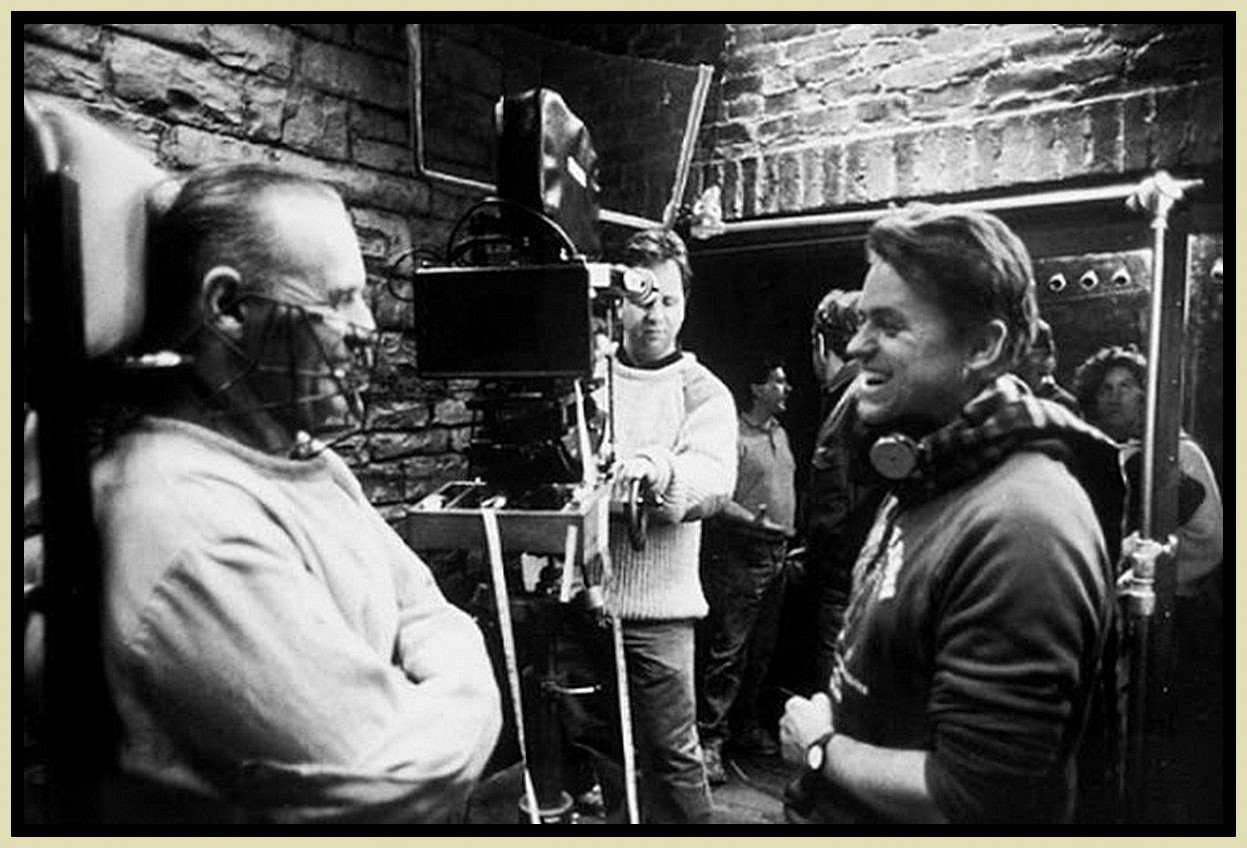
JODIE FOSTER : ANTHONY HOPKINS : THE SILENCE OF THE LAMBS : GALLERY AND REVIEW
CAST:
Jodie Foster
(Clarice Starling), Anthony Hopkins (Dr Hannibal Lecter), Scott Glenn
(Jack Crawford), Ted Levine (Jame Gumb), Anthony Heald (Dr Frederick
Chilton), Brooke Smith (Catherine Martin), Kasi Lemmons (Ardelia Mapp),
Diane Baker (Senator Ruth Martin)
PRODUCTION:
Director –
Jonathan Demme, Screenplay – Ted Tally, Based on the Novel by Thomas
Harris, Producers – Ron Bozman, Edward Saxon & Kenneth Utt,
Photography – Tak Fujimoto, Music – Howard Shore, Makeup – Carl
Fullerton, Production Design – Kristi Zea. Production Company – Strong
Heart/Demme.
SYNOPSIS:
Trainee FBI agent Clarice Starling is assigned by the FBI’s Behavioural Science Director to interview Hannibal Lecter, a former psychiatrist of genius intelligence with a predilection for cannibalism where he is locked away in a maximum security cell. It is hoped that Clarice can bring Lecter’s understanding of the psychopathic mind to bear on the serial killer nicknamed Buffalo Bill who is skinning the bodies of women across the country. As time draws near for another victim who has just been abducted by Buffalo Bill, the fascinating, urbane Lecter draws Clarice into his web, taunting her with clues in return for personal information about her past.
Thomas Harris
is to thrillers what Stanley Kubrick was to cinema. Both were recluses;
both were exacting perfectionists who only produced one work a decade it
seemed – there is an average of seven years between Thomas Harris’s
novels; and when each work did appear it was a masterpiece of its form.
Thomas Harris has only produced five books so far – Black Sunday (1975), Red Dragon (1981), The Silence of the Lambs (1988), Hannibal (1999) and Hannibal Rising (2006). All of these have been filmed – as Black Sunday (1977) and the Hannibal Lecter tetraology, which is listed at the bottom of the page.
The Silence of the Lambs
is generally regarded as a landmark and a modern masterpiece. It won
that year’s Academy Awards for Best Film, Best Director, Best Adapted
Screenplay, Best Actor (Anthony Hopkins) and Best Actress (Jodie
Foster). Without a doubt, The Silence of the Lambs
was influential – it made the career of Anthony Hopkins who had a
substantial body of work mostly as a supporting actor before this but
rarely as a lead. (Ironically, despite coming to fame as a genius
cannibal here, Anthony Hopkins then found himself cast as a latter-day
Laurence Olivier in various costume dramas).
The Silence of the Lambs
was perhaps the single most influential genre film of the 1990s,
producing hordes of imitators about people going to visit psychopathic
geniuses locked in cells – Beyond Bedlam/Nightscare (1994), Angel Dust (1994), Just Cause (1995), The Ugly (1997), Instinct (1999), Oxygen (1999), The Cell (2000), Antibodies (2005) and Cold Blood
(2005-6). Moreover, its model, wherein Thomas Harris had drawn upon the
FBI methods of psychologically profiling serial killers, developed a
fascination with the public, with the term ‘serial killer’ entering
popular parlance, even becoming an object of cultish veneration. A
number of films rushed to copy The Silence of the Lambs’s model of detectives tracing criminals using forensic psychology – the likes of Slaughter of the Innocents (1993), When the Bough Breaks (1994), Se7en (1995), Copycat (1995), Kiss the Girls (1997), Postmortem (1997), The Bone Collector (1999), Resurrection (1999), The Watcher (2000), Murder By Numbers (2002), Mindhunters (2004), Taking Lives (2004), Twisted (2004) and tv series such as Prime Suspect (1991– ), Cracker (1993-6), Millennium (1996-9), Profiler (1996-9) and CSI: Crime Scene Investigators (2000– ) and its spinoffs.
Although, for all their use of the forensic psychology model, The Silence of the Lambs
and its successors seemed to oddly repudiate it. Certainly, there is an
intense fascination to this new genre – what one might call the
forensic psychology psycho-thriller – as one watches a detective story
being built up out of patterns and tiny behavioural clues. Prior to The Silence of the Lambs,
the psycho movie genre’s view of psychology and behaviour had been
rooted in absurdly outmoded and melodramatic forms of Freudian trauma – Psycho (1960) and successors – or where killers were stripped of human motivation and seen as incarnate faces of evil – Halloween (1978) and Friday the 13th
(1980) and various sequels. The forensic psychology psycho-thriller
gave the psycho film psychological motivation – it took a glimpse inside
the heads of psychopaths at what made them tick behaviourally.
Oddly and with
recurrent regard, these films, upon introducing the image of the
forensic psychological profiler, then repudiated what it stood for.
Almost all of the post-The Silence of the Lambs
films have created uber-killers – geniuses that are beyond normal
psychopathological motivation and who sit and toy with their pursuers –
Hannibal Lecter here, Ed Harris in Just Cause, the killer in Copycat, Jack of All Trades in Profiler, Brian Wicklow in Cold Blood – or who laugh at any attempt to analyse their motivation – Brad Pitt in Kalifornia (1993) and Machine in 8MM
(1999). In contrast, real forensic psychology brought serial killer
motivation into the open and explained what they did in terms of
psychological motivation where concepts of good and evil were moral
judgements that served little purpose. The forensic psychology film on
the other hand contrarily emphasises less the mundanity of their crimes
as it did moral horrors with the likes of Se7en, 8MM and Millennium even going so far as to tie killers to impending social collapse.
The true
debate in forensic psychology thrillers is a libertarian vs determinist
one – are killers responsible for their behaviour? Real world forensic
psychology tends to see most killers as helpless pawns caught in
behavioural patterns caused by extreme childhood abuse, whereas forensic
psychology films to a person glimpse inside the madness and conclude
that not only they but by implication all social disease is down to
choice. It is a conservative viewpoint. To place this in perspective –
these are the same arguments used to justify the death penalty – that
every person is responsible for their actions, that all crime is
something that is morally chosen.
The Silence of the Lambs
may be one of those occasions where one feels out of step with general
critical opinion. Thomas Harris’s book is a genuine steel trap of a
thriller – a book that this author has read all in one sitting. The film
is a competent psycho-thriller but left one wondering what all the fuss
was about. There are times that the film is amazingly faithful to small
details of the book – the chess game timed by the beetle crossing the
board, Miggs’s ejaculating into Clarice’s hair, Gumb using a couch to
fool Catherine Martin to helping him, even some of the dialogue word for
word. Other time it cuts and drops wholesale and what screenwriter Ted
Tally substitutes is amazingly clumsy and ham-fisted – like Lecter’s
trail of clues leading Clarice to Raspail’s car, which gets concertinaed
down to a laughable clue about “Help Yourself”. Gone is Lecter’s
teasing game with Senator Martin about ‘Billy Rubin’. Most of all gone
is the book’s unfolding profile of Buffalo Bill. We have a few glimpses
given throughout of Bill skinning large-bodied women, Lecter’s hints
that he covets something and that he is not a real transsexual, some
clues about sewing – but gone are any of the book’s explanation as to
how Gumb built a coat of breasts. In its place, we see Ted Levine
looking like a gender-bender refugee from a Guns‘n’Roses concert.
Part of the problem with The Silence of the Lambs
is also Jonathan Demme. Jonathan Demme is a competent commercial
director, no more. Demme had made various weak comedies such as Something Wild (1987) and Married to the Mob (1988). Subsequent films such as Philadelphia (1994) exist more as sentimentality-heavy sermons aimed at the Academy Awards crowd, while his remake of The Manchurian Candidate (2004) failed to take off. (The exception being the superb Beloved (1998), which should have won the accolades that The Silence of the Lambs
did). Jonathan Demme’s fundamental crime here is failure to have faith
in the ability of Thomas Harris’s story to tell itself. To express
points that do not need it, he resorts to caricature – the pompous
Chilton becomes a puffed-up cardboard character; there is no reason why
Gumb needed to be an over-the-top crossdresser when a single scene of
him dressing in a dead woman’s breasts or even describing such would
have had unforgettable impact.
The character
of Hannibal Lecter and Anthony Hopkins’s fine performance have an
undeniable effectiveness (and went onto to become a cultural icon) but
again Jonathan Demme overstates the part and has to deck Lecter out in
pasty face and have him calmly conducting music in the air while covered
in blood and surrounded by dead bodies. The scenes between Anthony
Hopkins and Jodie Foster have their own creepy fascination but again
Jonathan Demme lacks it as a storyteller. The dramatic emphasis of the
film is on the obvious set-pieces – Lecter’s escape from prison, or
Clarice’s surprise turning up at Gumb’s house while the FBI trap closes
in another direction, her being hunted with a nightscope in the cellar.
While Jonathan Demme hypes the story in these places, there is none of
the sense you get in Thomas Harris’s novel of Hannibal Lecter sitting in
his cell controlling the entire game and having both the FBI and
Senator Martin’s running about and of the way that Thomas Harris would,
with breathtaking skill, pull the carpet out from underneath the reader.
The best one can say for The Silence of the Lambs is that it is a competent thriller for those who have not read Thomas Harris.
Hannibal (2001) was a direct sequel, featuring a return performance from Anthony Hopkins but not Jodie Foster. The less well-known Manhunter (1986), based on Thomas Harris’s Red Dragon (1981), features Hannibal Lecter’s first screen appearance. Subsequent to the success of The Silence of the Lambs and Hannibal, Manhunter was remade as a prequel and a Hannibal Lecter origin story with Red Dragon (2002) also featuring Anthony Hopkins. Hannibal Rising (2007) was a further prequel, telling the story of Lecter’s childhood. The Silence of the Hams (1994) was a parody. Parodies can also be found in Fatal Instinct (1993), National Lampoon's Loaded Weapon 1 (1993), Austin Powers in Goldmember (2002), Cats & Dogs: The Revenge of Kitty Galore (2010) and Hoodwinked Too! Hood vs. Evil (2011).
Review: Richard Scheib
Images: Marcus Brooks
Labels:
anthony hopkins,
cannibals,
cooking,
crime.,
dr hannibal lecter,
jodie foster,
johathan demme,
lecter,
scott glenn,
ted levine,
the silence of the lambs,
thomas harris
Monday, 24 December 2012
VALERIE LEON: CAVE GIRL: BLACKBOXCLUB PIN UP NUMBER THIRTY THREE
Labels:
blood from the mummys tomb,
carry on up the jungle,
cave girl,
fur bikini,
hammer film actresses.,
hammer glamour,
pin up,
valerie leon
THE NIGHTMARE BEFORE CHRISTMAS: TIM BURTON GALLERY AND REVIEW : CHRISTMAS EVE POSTING!
Chris Sarandon (Jack Skellington), Danny
Elfman (Jack’s Singing Voice/Barrel), Catherine O’Hara (Sally/Shock),
William Hickey (Evil Scientist), Ken Page (Oogie Boogie), Glenn Shadix
(Mayor of Halloweentown), Paul Reubens (Lock), Ed Ivory (Santa Claus)
PRODUCTION:
Director – Henry Selick, Screenplay –
Caroline Thompson, Adaptation – Michael McDowell, Based on a Poem by Tim
Burton, Producers – Tim Burton, Denise Di Novi & Kathleen Gain,
Photography – Pete Kozachik, Music – Danny Elfman, Stop Motion Animation
Supervisor – Eric Leighton, Production Design – Tim Burton & Denise
Di Novi, Visual Consultant – Rick Heinrichs. Production Company –
Touchstone.
SYNOPSIS:
In Halloween Town, Jack Skellington, the pumpkin king, succeeds in overseeing another highly successful Halloween. However, Jack is tired of receiving these accolades and wants more. In the woods, he discovers a door in a tree and falls through into Christmas Land. He returns to Halloween Town all enthused about Christmas and marshals the creepy-crawly denizens of Halloween Town into building toys and skeletal reindeer. They then abduct Santa so that Jack can take his place on Christmas Eve. Meanwhile, Jack’s girlfriend Sally has a precognitive dream, one that Jack seems oblivious to, that Christmas will end in disaster this year.
COMMENTARY
This dark and brilliant film is one of the
few masterpieces to come out of the muchly debased sub-genre of
children’s filmmaking in recent years. Despite unanimously glowing
reviews, The Nightmare Before Christmas
did only moderate box-office business Stateside when it came out,
although has built up a considerable cult since (even being re-released
in 3D in 2008). It is not hard to see why – as a children’s film that
embraces the spirit of Halloween and has a gleefully dark tone, it is
guaranteed to offput any parent that insists their child can only watch
positive feelgood Christmas fables. If the tone isn’t enough, then a
scene where Santa Claus is tied up and tortured surely is.
To make a full-length stop-motion animated
feature has been a long-time dream of Tim Burton, director of
live-action fare such as Beetlejuice (1988), Batman (1989), Edward Scissorhands (1990), Batman Returns (1992) and Ed Wood
(1994). Tim Burton began his career as an animator at Disney and first
branched out into filmmaking with the stop-motion animated short Vincent (1982) made in the same expressionistically contorted style as The Nightmare Before Christmas. Despite the publicity machine’s attempts to mislead us so, Tim Burton does not direct The Nightmare Before Christmas, however his distinctive style hangs over and imprints itself on every frame of the film. From Vincent to the outlandish zebra-striped sandworms of Beetlejuice,
Burton has a liking for this eccentrically twisted, cartoon
Expressionist style – it is as though Charles Addams’s original Addams
Family characters had strayed into the world of The Cabinet of Dr Caligari (1919).
The Nightmare Before Christmas
is certainly the nearest anybody has coming to putting the peculiarly
morbid world of Charles Addams on screen in toto. There are some
surprisingly dark and scary moments, particularly during the unveiling
of the Halloween Christmas presents – severed heads wrapped as presents,
kids being pursued by malevolent ducks with painted, bleeding bullet
holes and giant Christmas-tree devouring snakes. Like several other
1990s family films, particularly the two Addams Family films, The Addams Family (1991) and Addams Family Values (1993), The Nightmare Before Christmas
willingly embraces what might be called anti-feelgood values where the
scary, the perverse and the sadomasochistic are presented as normal and
harmless.
Like all of Tim Burton’s work, The Nightmare Before Christmas
has a clear affection for outsider characters. The film creates an
appealingly woolly menagerie of supporting grotesqueries – from
werewolves and vampires, even a fish-like variant of The Creature from
the Black Lagoon, to walking bathtubs and skeletal reindeer, to Jack’s
ghost dog Zero, a grotesque musical trio who play living accordions and
cellos with living heads inside the soundboard, and a mad scientist who
from time to time flips the hinged lid on his head back to scratch his
brain. The character of Jack Skellington (who has clearly been inspired
by Jack Pumpkinhead in the Oz books)
is presented with the flawed hubris of the character who only needs to
realise his true position in life. The character the film seems to have
the most regard for is the character of Sally – a sort of Cabbage Patch
Bride of Frankenstein who is forever having to sew her own limbs back
on. The Nightmare Before Christmas never goes as far as the Addams Family
films in seeing the gleeful and perverse anti-values as superior to
staid middle-class values – it presents the few people we see in the
trip into the outside world with an affectionately rounded softness –
but rather sees, in a typically Burton-esque way, its eccentric offbeats
as a group of vulnerable outsiders worthy of inclusion. It ends
appropriately not with the triumph of anti-values but the
self-realisation of its monsters and a cosy restoration of the status
quo.
On its technical side, The Nightmare Before Christmas
is a staggering achievement. If one considers the fact that it has been
shot one frame at a time, it is even more amazing. This is only
eclipsed by the astounding job of design that has gone into the creation
of Halloween Town. From the wonderfully desolate world of the graveyard
with its skeletal trees and black-and-white slate tombs to its
curled-up loops of hills, its rickety dog-leg towers that look like
upended stockings, to Oogie Boogie’s domain, which is like a Las Vegas
ghost train ride in iridescent glow-in-the-dark colours, the film is a
work of contorted genius.
The Nightmare Before Christmas
announced animator Henry Selick as one of the major new talents to
emerge in fantasy in the 1990s. Despite the universally positive reviews
enjoyed by The Nightmare Before Christmas, Henry Selick has found difficulty mounting other projects. He next made the also Tim Burton-produced Roald Dahl adaptation James and the Giant Peach (1996), a well-worthwhile film that also failed to obtain the audience it richly deserved; the partly live/partly animated Monkeybone (2001), set in an afterlife of a cartoonist’s unconscious, which was a huge flop; and the adaptation of the Neil Gaiman novel Coraline (2009).
Tim Burton and screenwriter Caroline
Thompson later returned to stop-motion animation and the same darkly
grotesque Gothic world and design scheme with Corpse Bride (2005), with Burton this time taking a co-directing credit. Burton later solo directed the stop-motion animated Frankenweenie (2012).
Review:Richard Scheib
Images: Marcus Brooks
Review:Richard Scheib
Images: Marcus Brooks
Labels:
corpse bride,
danny elfman,
father christmas,
halloweetown,
peter cushing.,
santa claus,
stills gallery,
the nightmare before christmas,
tim burton
Sunday, 23 December 2012
MERRY CHRISTMAS TO OUR FOLLOWERS: RAQUEL WELCH: CHRISTMAS DAY ON ONE MILLION YEARS BC : HAMMER FILMS
A
Very Merry Christmas to all our followers! Here's Raquel Welch on the
set of Hammer Films ONE MILLION YEARS BC, celebrating Christmas Cave
Girl Style! Welch has been our post popular post for over a year!
Labels:
cave girl,
christmas greetings,
fur bikini,
hammer films,
one million years,
peter cushing.,
raquel welch
GENE WILDER : MARTY FELDMAN :TERRI GARR: MEL BROOKS' YOUNG FRANKENSTEIN REVIEW AND GALLERY
CAST
Gene Wilder (Frederick Frankenstein), Peter Boyle (The Monster), Teri Garr (Inga), Marty Feldman (Igor), Madeleine Kahn (Elizabeth), Cloris Leachman (Frau Blucher), Kenneth Mars (Inspector Kemp), [uncredited] Gene Hackman (Blind Hermit)
PRODUCTION:
Director – Mel Brooks, Screenplay – Mel
Brooks & Gene Wilder, Producer – Michael Gruskoff, Photography
(b&w) – Gerald Hirschfeld, Music – John Morris, Special Effects –
Hal & Henry Millar Jr, Makeup – William Tuttle, Production Design –
Dale Hennessey. Production Company – Gruskoff/Venture Film/Crossbow
Productions/Jouer.USA. 1974.
When one thinks of a "perfect film", it's more often than not a drama
that comes to mind. In the course of this series, there are not very
many comedies that make the cut, let alone ones as downright zany and
farcical as Young Frankenstein. Yet there can be no denying the sheer
genius of this, one of the most perfect comic motion pictures ever made.
In a career highlighted by some damn funny movies, Mel Brooks truly
outdid himself with this, the one he'll always be most remembered for.
Sure, there have been others, such as Blazing Saddles and The Producers,
that come to mind as comedy classics. But none seem to touch the
sublime combination of humor, homage and pathos that this one does. It's
very easy to see that Brooks has a deep-seated, genuine affection for
the Universal horror flicks he is parodizing here. It is exuded in every
moment of screen time, and comes across in every single performance. It
is a labor of love, and a joy to behold.
It's no wonder that Brooks would repeatedly revisit the formula he
started with this film, of spoofing a favorite film genre. It works so
well here, that it's only natural to try and recreate it. And while it
did work again a few times, it never clicked quite as well as it does
here. This is a film so good that it can actually stand amongst the very
films to which it is paying tribute.
Most importantly, it's funny as hell. Mel Brooks has been accused of
employing stale humor at times in his movies, but that is never further
from the truth than in the work he put into Young Frankenstein. To be
fair, a great deal of this can also be attributed to the great Gene
Wilder, who conceptualized and co-wrote the project with Brooks. In
fact, I'd submit that the movie's genius may be more attributable to
Wilder than to Brooks.
Not only does Wilder excel as the co-creator, but also as the film's
star. In no other film is his natural frenetic energy put to better
use--this is a comic performance for the ages. And he's not alone,
either, as the movie is rich with brilliant comic performances from the
likes of Teri Garr, Gene Hackman, Peter Boyle as the Monster, and of
course the late, great Madeline Kahn doing her best old-time movie
starlet impression.
And then there are Cloris Leachman and Marty Feldman, two masters of
comedic timing whose characterizations as Frau Blucher and Eye-Gor add
so much to the film. Not to mention Kenneth Mars in a role directly
spoofing that of Lionel Atwill in Son of Frankenstein. Together with the
infectiously brilliant Wilder in the lead, this troupe of outstanding
performers represent one of the finest comedy ensembles ever put
together on film.
Like the very best parodies, Young Frankenstein bursts with genuine
admiration and affection for the source material. It looks and feels
like a Universal horror film, and is bursting with references and
in-jokes targeted at ardent fans. The hermit scene alone is so memorable
that for many, it has actually eclipsed the original scene from Bride
of Frankenstein, upon which it was based. That says a lot.
There are so many timeless set pieces and gags scattered throughout by
the keen comedic minds of Brooks and Wilder. The old "walk this way"
routine with Eye-Gor. The doctor's ludicrous medical school
presentation. "Abby Normal". Frau Blucher and the neighing horses. And
of course, "Puttin' on the Ritz." And yet, even in a comedy as
ridiculous as this one, there is room for genuine pathos and gravity, as
can be witnessed, for example, in the scene in which Frankenstein and
his monster come to an understanding while sharing a jail cell. This is
more than just Brooks and his vaudeville schtick. This is comedy on a
whole other level.
There is a reason why Young Frankenstein stands out from the rest of Mel
Brooks' body of work--why the rest of his career was arguably an
attempt to equal its greatness. With the help of Gene Wilder, he was
able to craft something that has truly stood the test of time as the
ultimate love note to a venerable subgenre of film that Brooks, Wilder
and so many others hold so dear. Most importantly of all, it is
uproariously funny, and a rare comedy that stands up to endless repeated
viewings. Call it Frankenstein. Call if Fronkensteen. I call it
brilliance.
Review:HERE
Images: Marcus Brooks
Review:HERE
Images: Marcus Brooks
Labels:
frankenstein,
gene wilder,
kenneth mars,
madeleine kahn,
marty feldman,
mel brooks,
spoof comedy,
terri garr,
young,
young frankenstein.
Saturday, 22 December 2012
REMASTERED AND RESTORED: HAMMER FILMS DRACULA : STARRING PETER CUSHING AND CHRISTOPHER LEE BLU RAY RELEASE
Labels:
blu ray combo,
christopher lee,
dracula,
film release date,
hammer films,
icon entertainment,
lionsgate,
peter cushing,
petercushing appreciation facebook uk fan page
Thursday, 20 December 2012
'THE LIST OF ADRIAN MESSENGER' : GALLERY AND REVIEW
|
Release Date: 1963 Duration: 98 min
Cast:
Alan Caillou, Bernard Fox, Richard Peel, John Huston, Barbara Morrison, Anna Van Der Heide, Jennifer Raine, Anita Sharp-Bolster, Noel Purcell, Stacy Morgan, Tim Durant, Ronald Long, Tony Huston, Bernard Archard, Dana Wynter, Herbert Marshall, Marcel Dalio, Paul Frees, Delphi Lawrence, Audrey Scott, Mona Lilian, John Merivale, Nelson Welch, Banker's Hours the Horse, Joe Lynch, George C. Scott, Jan Merlin, Dave Willock, Tony Curtis, Frank Sinatra, Kirk Douglas, Eric Heath, Clive Brook, Gladys Cooper, Burt Lancaster, Constance Cavendish, Robert Mitchum
The film begins with a sinisterly shadowy and narrow, cobbled rain shimmered street as a black Humber cab dispenses its fare outside a rather run down hotel. The silhouetted fare enters a rather run down hotel under the reflected and watchful eyes of an elder, stoic, pipe smoking Vicar. Who waits a moment. Then follows to watch a caged lift rising upward. Satisfied. The Vicar opens the returning lift’s door. Blocks with a hard covered book. Then slinks off to do some fiddling with the Junction Boxes wired to the lifts. The Vicar returns. Retrieves his book and wanders off outside as the fiddled with lift car is called up. Only to plummet down the shaft a few moments later. The Vicar turns at the sound of the crash as sirens begin to wail. To pull out a folded sheet of paper with a list of neatly typed names. Nearly all with penciled lines through them. One name is notably unlined. Adrian Messenger. Which supplies the grist for some neatly done opening credits. Adrian is introduced just after a fox hunt has wound down. Surrounded by kith and kin. We discover that Adrian is a writer of some note. Cousin of stunningly beautiful, widowed Lady Jocelyn Bruttenholm. Dana Wynter; who radiates subtle, subdued though flawless British aristocracy. And her a son, Derek. All of 13 years old. Played by director Huston’s son, Tony. And a terribly polite chip off his grand father, Clive Brook’s upper class block. The Marquis of Gleneyre. Patriarch of a rather palatial estate hours away from the hustle and bustle of London. That raises horses and beef and has been in familial hands for centuries. Another guest is focused upon. General Anthony Gethryn, retired. Late of Britain’s MI-5. Whose area of expertise is codes and phonetics. Magnificently and quietly played with attendant stiff upper, mustached lip by George C. Scott. It seems that Messenger, briefly played by John Merivale has been working on the why and wherefores surrounding what looks like a string of random accidental. suspicious deaths across the UK, and Canada over more than five years.. What Messenger has needs a new perspective and a different set of eyes to look at the names of the oddly deceased.. Gethryn listens and agrees to take a look and trade notes with Messenger upon the latter’s return from America in a fortnight. Which sets up the next vignette. With a suitcase being weighed at the ticket counter at a London airport. The suitcase is over weight and belongs to the Vicar, who has a ticket on the same flight to America via Montreal as Messenger. Surprisingly, Messenger offers to split the difference with his suitcase which is under weight. The Vicar agrees and toddles off to the bathroom. To reveal himself as Kirk Douglas, then exit sometime later in the guise of a balding, prim and proper civil servant. Furled umbrella and all. Blissfully ignorant of the airport’s P.A. system asking the Vicar to return to Immigration. The Boeing 707 airliner is seen taking off with the Vicar’s suitcase in the belly of the aircraft. Which moments later explodes and crashes,Titanic like, into the North Sea. Leaving only two survivors. One spread out atop a floating wooden crate while hanging onto the slowly dying Messenger. Who rambles on with his last breaths about “George, photographs, Emma’s, brushes and clean sweeps.” The sole survivor is rescued as an investigation begins at Scotland Yard. General Gethryn is in attendance to kibbitz. Since he’s known Lady Jocelyn since she was a child and desires to flex his Hercule Poiroit-like mind to help unravel the mystery. Curiosity piqued by the sole survivor mentioning he’d smelled Cordite after the airliner crashed. He hands over the list of names Messenger had given him to the Yard’s Chief Inspector. Discussions are had. Orders are given to nose around discreetly as Gethryn heads off to interview the survivor in a nearby hospital. The survivor, Raoul Le Borg. Played with rakish, Charles Boyer style and charm by Jacques Roux had been busy in the French Resistance during the war and knows something of Cordite. Its exploded odor and myriad uses in blowing up railroad tracks, switching yards, ammo dumps and the like as ‘Ajax’. Executing short wave and Morse Code orders from Gethryn’s ‘Polidor’. The two reminisce with Lady Jocelyn in attendance and is shocked when Gethryn explains that Messenger was murdered. Then Gethryn asks Le Borg to try to remember exactly what Messenger said to him before dying. Gethryn takes notes as the attendant nurse announces that visiting time is over. Gethryn then goes to work trying to decipher what Messenger has said. Suddenly aided by Le Borg, who decides to go AWOL and join the hunt. Gethryn has a plan and puts Le Borg back in the sea as the two find flaws or deeper meaning in Messenger’s words. Two are. One that helps to form a sentence. Another that changes ‘Emma’s’ to ‘MS, or ‘Manuscript’. Which works quite well since Messenger was a writer. Gethryn and Le Borg head off to Messenger’s empty flat, but Lady Jocelyn gets there ahead of them. Only to discover the prim, proper civil servant, Mr. Pithian. Who had just finished playing with Messenger’s manuscript. Mr. Pithian tells Lady Jocelyn that he lives in the flat beneath and came in to check in on and feed Messenger’s tabby cat. Pithian excuses himself and manages a getaway by in the taxi that has just disgorged Gethryn and Le Borg. Lady Jocelyn invites Gethryn and Le Borg in as Gethryn quickly goes over the photos looking for ‘George’, who’s not to be found. Closer examination of the manuscript reveals that at least three pages have been re-written. With errors in punctuation and spacing. While this is going on, Pithian goes to the typist’s and presses the door’s buzzer. Gethryn, Le Borg and Lady Jocelyn arrive an hour later to find the typist, Miss Gwendolynne La Doll dead. Due to an open gas line inside her flat. The net is starting to close as Scotland Yard reports to Gethryn. One name is left. James Slattery, who lives in Greenwich. Slattery is a piece of work with secrets to hide. Large, bullying and in a wheel chair. Slattery blusters his way through life. Expecting pity for his situation is a tall order when played by Robert Mitchum. Who’s loud mouthed and drinks to much and is not who or what he appears to be. Having taken on the identity of his disabled, dead brother, Joe. To collect his monthly stipend from the Ministry of Defense.Is it any wonder that James is quickly dispatched and dumped, wheel chair and all in the Thames? At least now, Gethryn and Le Borg have a common denominator. Burma. Specifically a POW camp, Where one of its inmates, a Canadian, exchanged information for tobacco and better treatment. Causing the deaths of several prisoners by betraying them before an escape attempt. A Canadian sergeant named George Brougham (pronounced ‘Broom’). The family name for Bruttenholm. It all falls into place. The Marquis of Gleneyre is pushing 80 and may soon die through natural causes. Lady Jocelyn’s husband died in the Korean war. The intended target all along has been young Derek. Who has suddenly received a splendid four year old Gypsy trained mare named ‘Avatar’ who starts and stops to Gypsy commands. A gift from Messenger a year and a day ago. Lo, and behold the weekend arrives and there is a fox hunt. Full blown with men in jackets, jodphurs, top hats, the Marquis as the Hunt Master, about sixty Gleneyre hounds and a splendidly dressed and turned out George Brougham ready to crash the party. The fox is released. The hounds follow shortly thereafter with the huntsmen close behind. The fox gives a merry chase over hill and dale as Brougham gets ahead of the pack to find the hounds who’ve trapped the fox. The tail goes to Brougham. One heck of an introduction into the Bruttenholm family and its business discussed over dinner and brandy and cigars afterwards. Brougham is all smooth charm throughout. Even taking a few moments to play a duet opposite Lady Jocelyn on open baby grand pianos. Much to the chagrin of Le Borg. The following morning Brougham is headed for a walk when called aside by Gethryn. Who basically lays out all of accrued evidence to Brougham in order to make himself a target. Something Brougham is more than willing to do by snaring a fox. Putting it in a burlap sack to create a scent ‘drag’ over fields and fences to a spot where Brougham places a multi disked and wickedly tined hay rake. An uniquely frightening weapon of destruction hidden behind a relatively low, wide stone fence. Brougham then creates an alibi by calling Gleneyre to have Brougham in London during the next day’s fox hunt. The next day’s hunt begins with a slightly larger crown than the previous hunt. Front and center is a rather tall, stout woman from the British variant of the SPCA. There to protest the hunt and worth of more than passing attention as the hunters ride off and the fox is released. The hunters follow the hounds who follow the dragged scent. The onlookers, protestors and field hands follow the hunters to a spot just before the fence where everyone congregates to hear that a ‘drag’ has been used. An abomination to the spirit of the hunt and Gleneyre, sayeth John Huston in a brief cameo. As Gethryn calls for the hound keeper and the lead hound to find the culprit. The hound goes from spectator to protestor to a properly attired pheasant hunter. To wind up at the feet of a rather seedy, bearded field worker. Who pushes Derek out of the way. Mounts Avatar and tries to jump the stone fence. Only to have the horse stop in mid leap as Derek shouts the Gypsy command. A scream is heard. The crowd gathers as the field worker slowly peels off his rubber face to reveal George Brougham. What Makes This Film Good? John Huston creates an meticulously detailed and moody period piece that has the look, feel and atmosphere of countless Basil Rathbone Sherlock Holmes films. Foggy London rain slicked streets and all. Were it not for the Boeing 707 taking off early in the film. It could easily be mistaken for the late, post war 1940s. The dialogue supplied by Anthony Veiller’s screenplay taken from Philip MacDonald’s novel of the same name is succinct, distinct and delivered with a proper stiff upper lip and dry British wit as more and more is unveiled in the mystery. Sets are lavish in the extreme when depicting Gleneyre. Courtesy of Oliver Emert. Showing the vast expanse and faded splendor between the classes. Especially when the film focuses on James Slattery and the scenes around Greenwich. Its fog is dense beyond razor sharp shadowed alley ways masking ominous, foreboding piers and wharves. And when shadows cast along the hall as Gethryn and Le Borg approach the flat door of the deceased Miss La Doll. Only to be topped by Huston’s clever, long standing use of mirrors comes into play when they discover her body.Costuming is superb. Covering all the bases from opulent with the principles to down right shabby when called for. Most notably George C. Scott’s impeccable attire at any given moment. Offset by Lady Jocelyn’s expensive, exquisite gowns and skirted ensembles. The soundtrack by Jerry Goldsmith is kept to a minimum when dialogue abounds and works extremely well in action scenes during the hunts and when Le Borg tries to remember Messenger’s dying words.George C. Scott testing out his theater chops in a film that very closely resembles a multi act, full dress play. Aided by solid character across from across the pond. Augmented by a passel of A-List talent. Tony Curtis, Frank Sinatra, Robert Mitchum and the multi disguised Kirk Douglas. All hiding under heavy make-up, masks and assorted appliances designed by legendary Bud Westmore and executed by John Chambers, David Grayson. Nick Marcellino. With hair styles by Larry Germain.Half the fun in this film is trying to figure out who’s who. A task made more difficult by expert dubbing in some instances. Though Mitchum is easiest to find. And Burt Lancaster, the most humorous! SOURCE: HERE |
Labels:
burt lancaster,
dana wynter,
frank sinatra,
george c scott.,
john houston,
kirk douglas,
robert mitchum,
the list of adrian messenger,
tony cutis
Subscribe to:
Posts (Atom)